
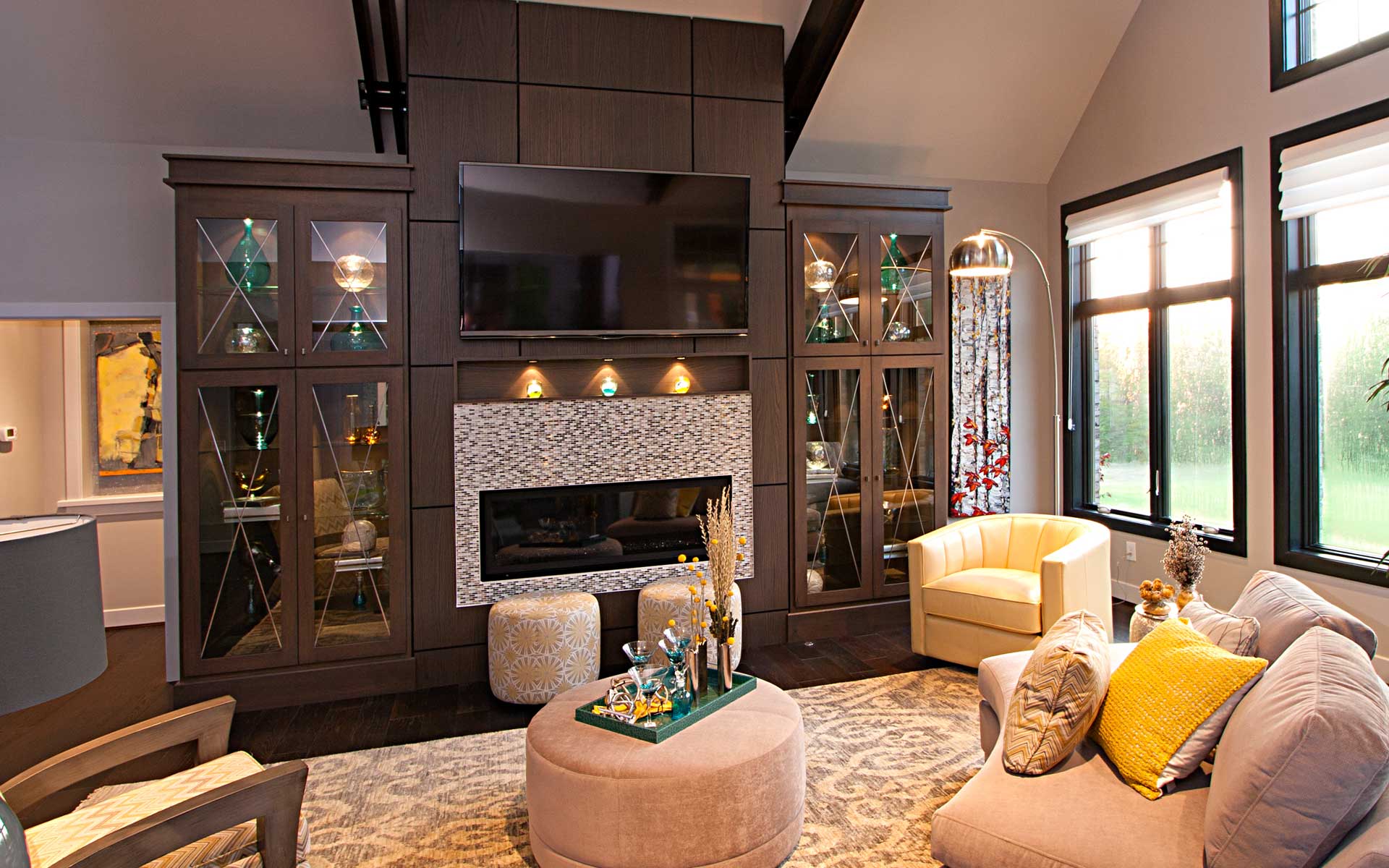
Why Wood Selection Matters
After nearly 30 years of building custom woodwork in our Lebanon, Ohio shop, we can say with confidence that the single most impactful decision in any custom project is the choice of wood species. The wood you select determines everything — the color and grain character of the finished piece, how it ages over time, how it responds to your home’s humidity and temperature, and ultimately, whether the final result matches the vision you had in mind.
Many homeowners walk into a project with a general idea — “I want something dark” or “I want a rustic look” — without understanding the specific properties that make each species unique. This guide is our attempt to share what we have learned from decades of working with wood every day.
Domestic Hardwoods: The Foundation of Fine Woodwork
White Oak
White oak is the backbone of American woodworking. Its distinctive grain pattern — characterized by prominent ray flecks and a warm, golden-brown color — has been prized by furniture makers and builders for centuries. In our shop, white oak accounts for more projects than any other species.
Characteristics: Medium to coarse grain, excellent durability, naturally resistant to moisture and decay. Janka hardness rating of 1,360.
Best for: Built-in bookcases, entertainment centers, kitchen cabinetry, bar tops, flooring, and any project where a classic, timeless look is desired.
Finishing notes: White oak takes stain extremely well and can be finished in virtually any shade from light natural to dark espresso. It also responds beautifully to fuming (ammonia treatment), which brings out deep brown and amber tones.
How it ages: White oak darkens slightly over the years, developing warmer amber tones. This natural aging process is considered desirable and adds character to the piece.
Black Walnut
Walnut is the luxury choice among domestic hardwoods. Its rich, chocolate-brown heartwood with lighter sapwood streaks creates a striking visual that instantly elevates any room. We use walnut extensively for bar tops, desk surfaces, and statement pieces where the wood itself is the design feature.
Characteristics: Straight to wavy grain, medium hardness, excellent workability. Janka hardness rating of 1,010.
Best for: Bar tops, dining tables, home office desks, fireplace mantels, and any project where a bold, contemporary aesthetic is desired.
Finishing notes: Walnut’s natural color is so beautiful that many clients opt for a clear finish that allows the wood to speak for itself. Oil finishes like Danish oil or tung oil enhance the depth of the grain without adding artificial color.
How it ages: Walnut actually lightens slightly over time, particularly when exposed to natural light. The deep chocolate tones mellow into a warm brown. Some woodworkers view this as the wood “coming alive.”
Cherry
Cherry is the romantic choice. When freshly milled, it appears as a modest pinkish-brown. But over months and years, cherry undergoes one of the most dramatic natural color transformations of any wood species, deepening to a rich, warm reddish-brown that is universally admired.
Characteristics: Fine, straight grain with occasional curly figure. Moderate hardness. Janka rating of 950.
Best for: Formal living room built-ins, library shelving, dining room cabinetry, and any project where you want a traditional, refined appearance.
Finishing notes: We often advise clients to use a clear finish on cherry and let nature do the coloring. Staining cherry can be tricky because the wood’s varying density causes uneven absorption. A skilled finisher knows how to manage this, but the natural aging process produces the most beautiful results.
How it ages: This is cherry’s superpower. Over 6-12 months of exposure to light, cherry deepens dramatically from pinkish-tan to a rich, warm reddish-brown. This is a feature, not a flaw — and it is one of the reasons cherry has been a favorite of furniture makers for generations.
Hard Maple
Maple is the chameleon. Its clean, light appearance provides a neutral canvas that works in nearly any design context. Hard maple is also one of the strongest domestic hardwoods, making it ideal for surfaces that will take heavy use.
Characteristics: Fine, uniform grain. Extremely hard and dense. Janka rating of 1,450.
Best for: Kitchen countertops, bathroom vanities, painted cabinetry (maple’s smooth grain makes it the ideal substrate for paint), cutting boards, and contemporary furniture.
Finishing notes: Maple’s tight grain can cause blotching with dark stains, so it is typically used in its natural light state or painted. When staining is desired, a pre-stain conditioner and careful technique are essential.
How it ages: Maple yellows slightly over time, particularly in strong natural light. This is subtle and generally considered a warm, pleasant change.
Exotic Hardwoods: Making a Statement
For clients who want something truly distinctive, our shop works with a selection of exotic hardwoods that offer colors, grain patterns, and textures not found in domestic species.
Sapele
Often called “African mahogany,” sapele offers a deep reddish-brown color with a distinctive ribbon-stripe grain pattern caused by interlocking grain direction. It is one of our most popular choices for bar tops and wine cellar racking.
Zebrawood
Named for its dramatic striped grain pattern, zebrawood makes a bold visual statement. We use it most often as a feature element — a bar top, a desk surface, or an accent panel — where its striking appearance can be fully appreciated.
Bubinga
Bubinga ranges from pinkish-red to deep reddish-brown, often with dramatic figure patterns. It is extremely dense and durable, making it excellent for countertops and bar surfaces that need to withstand heavy daily use.
Wenge
Very dark brown to almost black, wenge offers a dramatic, modern aesthetic. Its coarse grain texture creates visual depth that photographs beautifully but is even more impressive in person.
Painted Finishes: The Flexible Choice
We should mention that not every project demands a stained wood look. Painted built-ins remain our most popular finish choice overall, particularly for family rooms, mudrooms, and kitchens where a clean, architectural appearance is desired.
For painted projects, we typically build with poplar (an economical hardwood with smooth grain) or maple (for maximum smoothness and durability). The wood species matters even under paint — a quality substrate produces a smoother, more durable finish than particleboard or MDF alternatives.
How to Choose: A Practical Framework
When selecting a wood species for your project, consider these five factors:
-
Aesthetic Goal — Do you want the wood grain to be visible and prominent, or are you planning a painted finish? This narrows your options immediately.
-
Room Context — Look at the existing finishes in the room. What color are the floors, trim, and other woodwork? Your built-in should complement — not compete with — these elements.
-
Durability Requirements — A kitchen countertop faces different demands than a library bookshelf. Harder species resist dents and wear better in high-traffic applications.
-
Aging Behavior — Every wood changes color over time. Understanding how your chosen species will look in five or ten years prevents surprises.
-
Budget — Exotic species command premium pricing, while domestic hardwoods like oak and maple offer exceptional beauty at more accessible price points. A skilled craftsman can make any species look extraordinary.
See and Touch Before You Decide
No photograph can fully capture the warmth, texture, and grain character of real wood. That is why we keep samples of every species we work with at our showroom at 3800 Taft Drive in Lebanon, Ohio.
We encourage every client to visit, handle the samples, and see how different species look under various lighting conditions. Our designers can also bring samples to your home so you can compare options against your existing floors, trim, and furnishings.
Ready to Select Your Species?
Whether you are planning custom built-ins, a solid wood countertop, a custom bar, or any other woodworking project, the choice of species is where the journey begins. Contact Miami Woodworking at (513) 398-8194 or reach out online to schedule a free consultation at our Lebanon showroom.